






























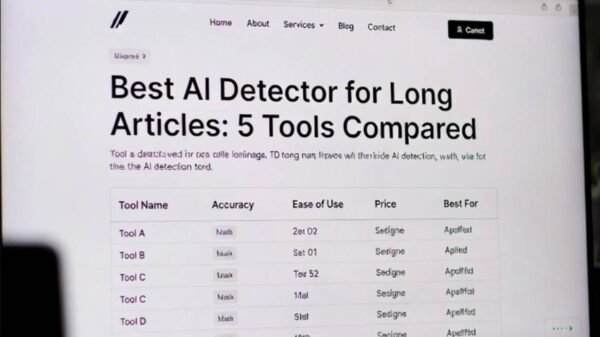








Long articles create a different challenge during content checking. A short paragraph may pass quickly through a detector, but a 1,500-word article usually contains mixed writing patterns, edited lines, and sections added at different times. Because of that, one simple score does not help much during the final review.
A useful AI detector should scan full drafts without breaking text into many parts. It should also show exactly where doubtful sections begin, so editing becomes practical instead of confusing.
Many writers now combine detection with other writing tools because long articles usually need correction after scanning.
1. Originality.ai
Originality.ai is widely used when long articles need detailed checking before publishing. Agencies and editors choose it because full drafts scan smoothly, even when the article length crosses one thousand words.
The report usually gives:
- overall AI probability
- sentence highlights
- plagiarism score in one panel
This helps because copied text and machine-written text need different corrections.
Sentence highlights become useful when only one section creates the problem. A writer can edit marked lines instead of changing the full article.
Many users rewrite flagged sections through a paraphrasing tool after scanning because rigid sentence flow usually needs only small corrections.
2. Copyleaks
Copyleaks works well when paragraph-level detail matters. Long articles rarely show equal patterns across every section, so paragraph reporting saves time.
The report usually includes:
- paragraph probability
- highlighted lines
- structured breakdown
This helps editors identify one doubtful block quickly.
A common situation happens when the introduction was written manually but the middle section came from AI support. Copyleaks makes that difference easier to identify.
Many writers shorten repeated explanations through a summarizer before scanning again because long repeated paragraphs usually raise stronger AI signals.
3. GPTZero
GPTZero became popular because reports stay simple even with longer content. It works well when a writer wants clear paragraph separation without technical complexity.
The report usually shows:
- overall AI estimate
- highlighted sentences
- paragraph breakdown
That helps during article review because one paragraph can be corrected without disturbing the full structure.
A practical advantage here is speed. Medium and long drafts usually scan quickly.
After checking flagged lines, many writers open a grammar checker because sentence edits can create punctuation problems or tense shifts.
4. Grammarly
Grammarly is useful during final article polishing because detection and correction happen in one place.
Long drafts usually need language correction after scanning anyway.
The tool helps identify:
- repeated sentence openings
- punctuation issues
- uneven sentence rhythm
A writer can scan and revise immediately. This saves time when deadlines are approaching.
Its AI reporting is lighter than dedicated detectors, but many writers still use it before final submission because editing becomes easier on one screen.
5. QuillBot
QuillBot helps when long sections need rewriting after detection. A flagged paragraph can move directly into rewriting mode without switching platforms.
This works well for:
- article intros
- repeated body sections
- rewritten conclusions
A long paragraph that sounds too balanced usually improves after one controlled rewrite.
Many users also check the final article size with a word counter because rewriting changes the content length quickly.
Which Tool Works Better for Long Articles?
The right tool depends on what happens after scanning.
Originality.ai suits a detailed review. Copyleaks helps when paragraph reports matter. GPTZero works well for quick checks. Grammarly helps with final corrections. QuillBot becomes useful when rewriting starts immediately.
A long article should never be judged by one score alone. Read highlighted lines carefully, edit only doubtful parts, and check again before publishing. That usually gives a stronger final draft.